Friday, August 15, 2014
Let's Call it Love Part 3: Sympathy
A testament to mothers. One woman who nearly lost her child pens a song for those that have. Her voice aches because she was almost one of those parents who brought a child to term only to have them taken away too soon. She prayed for her child's life even though she doesn't pray. She has faith when she needs it and her knees ache from being bent, begging, pleading with some unknown force to not take her child from her so soon. The near tragedy is wrapped in four minutes of music where a woman whose heart is split wide open, aching, finds peace and is gifted with the life of her child, but she grieves for those who were not so lucky.
God please let me be able to have children
A nine year old girl in hiding asks for help. She doesn't quite believe in the mystical, but she thinks it can't hurt. She has good grades and does what her parents ask of her. If someone needs help she's there and she thinks to herself she's a good person. If anyone deserves to have a prayer answered it's her. Her fingers run across a bible bound in black leather with a false name printed on the front- a name she rejects. She knows this book condemns her and it weighs heavily in her soul that she might go to hell if she ever lets anyone know who she is. She wants God to fix her, and with pain that shouldn't be in the voice of a young angel she asks god for magic. The bible is clutched in her hands and exasperated cries of a confused young girl are lost into the darkness of the night.
Please let me wake up in a new body
I want to be a girl
I want to be like all my friends and I want my parents to treat me like their daughter
Please let me be a mommy someday. I think I would be good at it
I take care of Tyler all the time and I like kids
I'll do anything you want me to if you make this happen
I'll go to church all the time and be good. I swear.
Just please let me be someone else
She puts everything away and looks at the stars wondering if anyone heard her. She goes to bed that night and she's excited in the same way she would be before Christmas, because she knows she'll wake up and God will fix her.
I am this girl, but this story never came with a happy ending. Disillusionment and reality set in and I knew these things weren't possible. I'd never bring a child into this world, and I don't know if I'm ever going to be okay with that, and while I'll never fully understand being so close and having something taken away like how Corin Tucker explains here I have the pang of numbness in knowing pregnancy isn't even an option. So I sit in the darkness every other night feeling grief over something I never lost over something I never had.
But there's this song that means so much to me when I'm feeling this dysphoric grief. The truth of why I write about Sleater-Kinney and why they mean so much to me lies in how they've become the soundtrack to my own survival. Sympathy in particular is a coping mechanism. It is my most played Sleater-Kinney song because I'm often at odds with my body over this one specific thing I cannot fix. I used to pray all the time, and I don't believe in god anymore, but I still find myself wishing at night I'd wake up differently. Corin would sing "I only come to you, only when in need" and I still find myself falling back on those prayers I used to when I'm feeling horrible. I guess I still pray when I'm in need as well.
There is one part of the song that resonates with me more than the rest. Corin's most powerful moment as a vocalist is in the bridge of Sympathy when she sings "And I'm so sorry, for those who didn't make it, for all the mommies who are left with their heart breaking". I listen to this song over and over again for those words. The optimist in me hopes science will one day catch up, and give me the opportunity to bring a child into this world, but I know that's very unlikely. At least I'll have this song to soundtrack my own pain and that's better than being left alone inside myself. But I wish it didn't exist, because no parent should have to go through what Corin did in fearing for her own child's life. In a perfect world Sympathy wouldn't exist and I wouldn't need to listen to it every day.
Sunday, July 13, 2014
Smells Like Girl: Hole's "Live Through This"
A young woman in a babydoll dress plucks away at a guitar shelved off from the world in her room while her parents are away. Her pain and hurt are burrowed deep inside of her, and she doesn't know if her days will get any easier. The kids at school make fun of her for being different. Her hair is messy and she has no interest in the mindless jocks that snap her bra in the gym. She sits on the bleachers alone with a forged excuse in her mother's hand writing so she doesn't have to participate. She slides headphones out of her backpack and a journal. The album begins to play as she scribbles down poems of teenage angst.
And the sky was made of Amethyst
Everything starts in medias res. Live Through This drops you into Courtney Love's world immediately with a single line that sets the tone for everything to come. A sky coloured deeply in violet, like a bruise after weeks of abuse that just won't go away. It's the blues coming from a woman in anguish and her feelings are splayed open for everyone to see. Her guttural screams that punctuate every moment of the song show a woman in pain. "Go on take everything, take everything, I want you to" becomes a rallying cry, a cathartic moment of release. When all you want to do in this world is fight back at all the pain that's clouding over your life like a never ending storm a moment like the chorus of this song echoes powerfully and deeply. The song is an exercise in release from Love's shouting vocals all the way down to the descending riffs that close the song. It doesn't exactly end with everything being better, but the blunt power of pent up anger gives one a feeling of temporary ease.
Live Through This is filled with misfit ballads. You hear songs on pop radio about girls who want to have fun, and those pining for romance, but you'll find none of that here. It's an album about those women on the fringes who don't get songs written about them and all of them are aspects of Courtney Love. As much as she wants to distance herself from Riot Grrrl (she even criticizes RG on "Rock Star") her lyrical themes fit with the premise of that movement. However, instead of telling girls to be strong she lets out a resounding cry that fragility is acceptable. This is most recognizable on "Doll Parts" when Love bellows with despair "Some day you will ache like I ache" and it stings. It feels true. In hindsight of just losing her partner it's even more resonant. It's bent over a church step, crying with endless grief. It's an album of stark moments of her psyche. She'll sing on "Plump" "They say I'm Plump, but I throw up all the time", and it's one of the more incisive moments on the entire album. She can't win due to society and the eating disorder metaphor works for Love's life. They want her to be a rockstar, they want her to be a good mom, they want her to be clean, they want her to be a role model, they want her to be the one who died instead of Kurt.
Underneath the pen of Courtney Love this album finds it's strength, but the musical structure also captures the Loud-Soft dynamic of Pixies inspired Grunge at the time that fits these lyrics remarkably well. The majority of the songs on Live Through This start out softer in the verse letting Love's voice coo and wrap around gentle drumming and plucky guitar chords then burst open for moments of intensity and distortion while Love screams. The real star of these instruments is Love's emotive voice. Her band perfectly compliments everything she wants to do, but the affectations of her vocals create one of the finest vocal records of the 90s. She can display buzzsaw power in songs like "Violet" and delicate frustration on "Doll Parts" while showing Allison Wolfe a thing or two about bratty sarcasm in "Rock Star". As much as I love the band here the show is her's and it's her statement of where she was in her life at the time, and it's one of the definitive albums of the 90s.
However, it's a shame Live Through This will never be viewed that way. The elephant in the room is that Courtney Love has been dubbed the Yoko Ono of her generation by misogynists and fools alike. She'll always live under the shadow of her martyred spouse. Cobain's death and drug usage are fetishized by those who love dead rock stars, but Love was eerily like Kurt, and she's hated for the same reasons Cobain is worshiped. If she were a man she'd be a god. She'd be the saviour of rock music and the last true rock star of her generation for her authenticity and lyrical prowess. Courtney Love isn't a man though so she'll be hated forever for "destroying" Nirvana. If we lived in a fair society Love's vulnerability, lyrical openness, and uniqueness would be beloved, but we don't, and those who love Courtney are always going to be in a position where they have to defend her. I love Courtney Love. Through all her problems and issues she's always been a tremendous artist and Live Through This is an album I often go to when I need to know I'm not alone in feeling like I'm about to fall apart. I just wish I had been smart enough to realize all of this when I was sixteen when I needed it the most. She's an icon in a babydoll dress, smeared make up and bad hair and I'll love her and this album forever.
Heroism in Young Mr. Lincoln
Superhero: A being with extraordinary physical or mental powers, far beyond the range of normal human ability, who uses these powers to protect the innocent and for the general good.
The idea of a superhero is connected to a level of selflessness and humility in their actions. They do whatever they can to make things right and try to improve the world in one way or another. People don't always read superhero stories to connect to these people but they do give us a model in which to live our lives; to become exceptional and make ourselves better people. In the 30s cinema didn't have the budget or the notion of putting those stories on screen, but they still existed in different forms. Our way of telling those stories changed from micro to macro and lost their way. Instead of humanism they'd go for the anti-heroes that muddied the lines of heroism and villainy. The notion of a superhero can be stretched to represent a person who does small things to improve lives or in this film's case save them. By the above definition Abraham Lincoln is a superhero and what makes him all the more special is that he's real. He doesn't have super strength or can climb buildings, but the man was selfless and human in a way that connects with these ideas, and John Ford's "origin" story about this man showcases the greatest strengths of both humanity and American ideas.
I've always felt that John Ford's cinema comes the closest to representing the soul of America; sometimes it is a damning portrait and other times showcasing the best of what this nation offers. Lincoln falls into the latter category. The story finds our hero early into a law career. He already has a way with oratory skill and he seems like the perfect encapsulation of the American man. He eats pie, he cracks jokes, he splits wood, he's intelligent and most importantly he has a good heart. The central conflict of Young Mr. Lincoln showcases that last trait. At a July 4th Celebration there is a brawl where one man is killed. Two brothers stand accused and their lives are immediately put in danger when the town wants to lynch them. Lincoln convinces the mob to settle down and let him handle the boys so he can have his first real case. Through the power of his words and the town's adoration for this man they lay back and let Lincoln bring this case to trial. It's a small moment but, he stood in the way of a conflict and prolonged the lives of innocents in a heroic way.
Ford also frames Lincoln in a heroically subtle way. He's often in the center of the frame, standing taller than most which is in direct opposition to his humble attitudes. He may stand taller than everyone else, but he always gets down to their level. His framing tells the story of a man who is both a hero and a normal guy. My favourite shot in the movie shows Lincoln sitting peacefully by a tree reading a book. I infer that this is when he experiences the greatest joys in his life. He loves helping people, but he's also a simple man of small joys. He isn't the type of man who is impervious to pain or loss either though, and one of the best scenes in the movie is when he is mourning the loss of his first love Ann Rutledge. This moment damages him and the heart to heart scene at her grave is both serene and saddening. The way the small branch he sets beside her grave falls over is a window into his psyche. He'd never quite be the same man again.
Like many stories of incredible beings this story also sees it's hero stand tall at the end. He wins the case and saves the boys lives. I love the final moments of the picture. Ford would not have our hero walk off into the sunset. We all know the American history that would follow into Lincoln's presidency, and he echoes that with powerful imagery. Lincoln walks off into the distance into the next chapter of his life, but it's dark and there's a storm on the horizon foreshadowing both the Civil War and his Assassination. It's a perfect closing image that tells you everything you need to know about where things were headed. The film itself is a fantastic examination of a heroic figure, and maybe the greatest this nation has ever seen. It doesn't go for the obvious narrative of the president who got us through the civil war, but instead it showed the character of the man whose leadership kept us from dying.
Saturday, June 28, 2014
Joe Dante: Matinee
Joe Dante's love letter to the power and joy found in cinema. There is one scene in particular that I keep thinking about today. After her husband has been sent off to potentially defend the United States (there's criticism of the military industrial complex in here, like in most of Dante's late work) a wife sits solitarily with the cinema she created herself. The home movies of her loved ones. These are possibly the only things she'll have left since her husband could die any day in the wake of nuclear annihilation. The power of these images and those memories trapped in celluloid bring her to tears. Her son is framed in the background in shadow also feeling the weight of their current nuclear situation. It's a scene of mournfulness and longing and is in direct contrast to the cinema as entertainment John Goodman's scenes. It's the versatility of these two examples that make Matinee work. Cinema can be anything and here it can be as close as you can get to those potentially lost or a half man-half ant nuclear terror making you scream, smile and laugh. It's a beautiful sentiment.
Thursday, June 26, 2014
Sexism within Wrestling and Problems We Need to Solve
I love professional wrestling more than almost anything in the world. It's where I go to whenever I'm stressed and it's easy just to sit back and enjoy the athleticism, the storytelling and the art of bodies in motion. This has been a difficult week to be a fan though due to sexism within the Internet Wrestling Community and a couple of things that happened over in the WWE. There is always a kind of "it comes with the territory" kind of attitude towards sexism within wrestling, and I don't think that has to be the case at all. We should constantly be making things better instead of just being complicit within the actions of companies who treat women as nothing more than titillation or fodder for jokes within wrestling broadcasts while they leave all the actual wrestling to the men. We're in need of a significant cultural change surrounding the treatment of women in both the IWC and WWE. We aren't on an equal playing field at the moment, and the only way to get there is to start talking about what needs to be changed. This week gave us quite a few examples.
When I started getting into wrestling earlier this year my best friend told me that I'd have to learn how to start tuning Jerry Lawler out, because if I ever listened to anything he said in commentary it would just detract from my viewing experience. She was right. I took her advice and a lot of the time during matches I turn on music so I don't have to hear what he or any other commentator is saying. I always do this during women's matches, but I feel like that's only putting a band aid on a larger problem. Jerry Lawler is absolutely toxic to my viewing experience. It makes me uncomfortable that he's still employed by the company and that he's still on my television every single week. Most of the time I just ignore what he is saying or what he does and wait patiently for him to retire, because his firing is never going to happen, but this week I couldn't ignore his actions. On his twitter account he recently posted a photo of him staring at current Women's Champion (I don't like using the term Diva) Paige's ass. I didn't notice it during the show, but when he posted the picture with the caption "best seat in the house" and it blew up all over my twitter feed it called to my attention Lawler's objectification of women in a way that I couldn't just mute. Cageside Seats did the right thing in posting an article about this incident and saying that he should not be doing this as a "legend" of the company. Paige would seemingly laugh it off on twitter with the hashtag #JerryJerryJerry but really even if she was offended what could she do? If she calls out a legend she'd definitely get buried. It's a lose-lose situation for her and a position no female wrestler should ever be put in. It makes me sick to think that this is a normalized behaviour to the point where calling out sexism is not an option because it would destroy your career. That's dangerous to any woman working within WWE, and that has to change.
The other incident within WWE that brings to light the sexism towards women within the industry was the pudding match between Vickie Guerrero and Stephanie McMahon. It's true that horrible degrading acts have been done to male wrestlers in WWE before (Vince's Kiss My Ass Club for example), but it doesn't quite carry the weight of women wrestling in something gross. I get why Stephanie McMahon did it. She's a heel and she wants to send Vickie off in the most humiliating way possible and that makes sense for her character, but how did we get here though? Vickie Guerrero is a trooper and a saint for putting up with everything she did while working within the WWE from jokes at her expense to being the subject of every kind of gross sketch Vince could think up. It makes sense for her character to go out this way and get comeuppance on her boss to put her in one of those situations. However, it's unfortunate that it makes sense for her character. She's the wife of beloved wrestler Eddie Guerrero and she carried strength through everything she ever did for the company that I've seen, but I hate that she was always relegated to jokes and gross out gags. She was great at her job and she could generate heat with a two word phrase all the time, and she went off strong on Monday's Raw, because she's always been strong, but I can't help but feel a little distanced from the scenario itself. Cageside Seats once again outlined one woman's problems with the sketch, and while I didn't have as much of an issue with it as she did it's a problem if any woman feels like a sketch is sexist, misogynist or offensive in any way. The last thing you want to do is drive away a potential audience member and if that piece is anything to go on they most certainly did on Monday. That shouldn't be happening.
The IWC is not a male institution. Their voices are certainly louder, but as a woman who has made many friends within the IWC who are also female I know that we exist and we like wrestling just as much as anyone else. There needs to be a place where our voices are heard so things like what happened at Voices of Wrestling this week do not happen any longer. There was a comment in a recent review of WWE Main Event where one writer referred to many different women's wrestlers that were featured throughout the show as "Whores". This is unacceptable on every single level. The comment has since been removed from the article and the author has issued an apology. Hopefully this never happens again, but knowing the kind of boys club attitude vibe that I get from most wrestling websites I know it's very likely I'll be seeing those words in a post again. No woman should have to feel denigrated by an author due to his own problems with women or whatever it is they are doing with female wrestlers on a specific show. There's also the problem of using "Whore" as a derogatory word. Sex Workers are not bad people and they deserve respect just as much as anyone else doing a job and to call a woman a "whore" as a means of trying to make her feel bad or anything else is just horrible behaviour and it shouldn't be appearing in official reviews for wrestling shows. Women should be treated with the same respect you'd give the men in any given wrestling show, and it's a shame that these problems both obvious and subtle seem to crop up on every wrestling site I visit. The writer is taking time off from Voices of Wrestling and says that he will not be reviewing women's wrestling ever again. That's probably the right course of action, because to have someone who doesn't respect what women do within the ring or within WWE or anywhere else probably shouldn't be writing about it in any official capacity.
I just want to talk for a minute now about why I love Women's wrestling. In the past year I've found another passion in my life in wrestling, and it mostly came on the backs of two wrestlers: Daniel Bryan and Sara Del Rey. Sara Del Rey is a hero to me. She got into wrestling because she loved it and she wanted to be just as good as any man who ever stepped inside of the ring, and if you've seen any of her matches with people like Claudio Castagnoli and El Generico you know that she absolutely was. I have issues with self confidence all of the time, but Sara Del Rey and many other female wrestlers (Rachel Summerlyn, Manami Toyota, Aja Kong, Bull Nakano) make me feel strong and like I can do anything in the world. They let me know that there is a place for me in any profession even if it's coded as more masculine and I can be better at it than anyone else despite what anyone tells me. They are amazing women and incredible wrestlers and it's such a shame that these issues crop up all the time. Women in professional wrestling are role models. Girls of all ages are watching the WWE and Indie circuits and finding super heroes in women who do suplexes and piledrivers. They are part of your audience and what are you teaching them when you say that they are only valued for their looks like Jerry Lawler did or their only place in the card is to get thrown into a pit of sludge, or reading that they are "whores" because of the way they dress or act. You're actively turning women off your shows, websites and sport by doing these things, and it's time that things start getting better. Wrestling needs to grow up, and I think it can. I'm optimistic about the future of WWE Women's talent with Sara Del Rey training new talent down in NXT. I think things can get better both in ring and in story lines, and fans are going to love it and women especially are going to appreciate it. It's just up to WWE and those writing about it in the IWC to let it happen and give it the respect it deserves.
Tuesday, June 24, 2014
Obvious Child
Female Filmmaker Project
(originally posted on letterboxd)
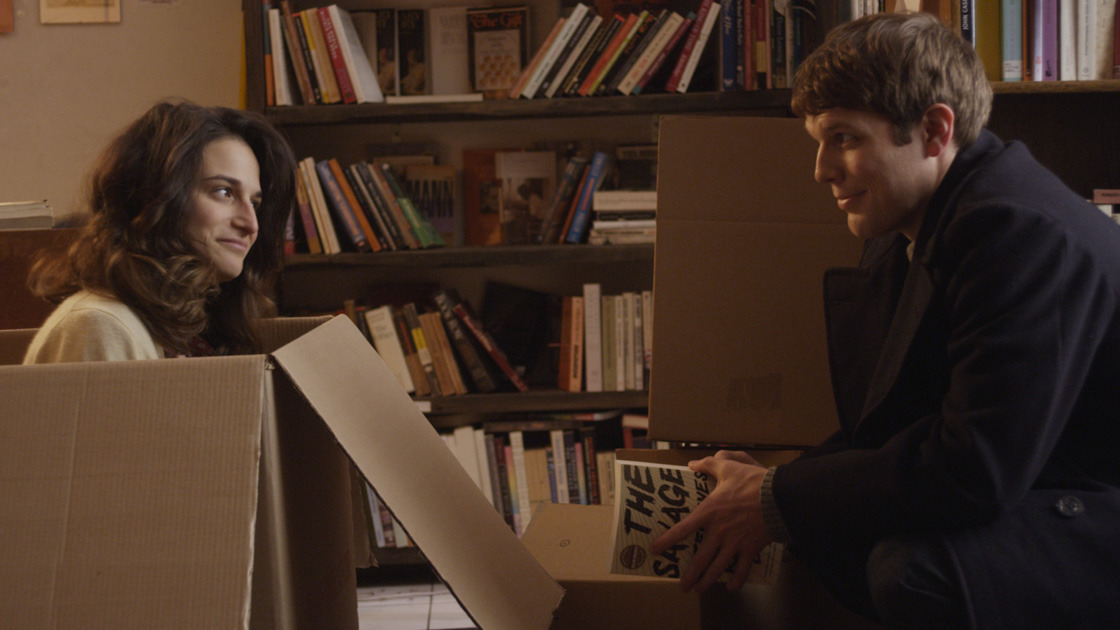
Obvious Child is a true feminist comedy taking up the mantle of a personal story being very political just for existing within cinemas for audiences to see. There's one scene in this movie where Nellie (Gabby Hoffmann) says something along the lines of "We're still being legislated by old white men in robes who think they have power over our cunts" and that's really the world we exist in today. Laws where access to abortion is easy and available are being repealed in states slowly and there's really no reason why that should be happening so here comes Obvious Child totally being marketed as an "abortion comedy" in the wake of all this recent fuckery. The abortion aspect of this movie is just one piece of this movie's story but the fact that it treats abortion as just something that people do is remarkable. The strengths of Obvious Child's politics are in what Donna (Jenny Slate) doesn't do as much as what she does. The film doesn't dwell on what the father will think in a major way and she never falls back and then decides to have the child just because the father seemed like he wanted to be a parent some day. She never wavers on her initial decision. She's free and independent and doing what she loves (comedy) and she doesn't want to be a parent. So an abortion is the best option, and it's her choice completely, because she's the one in control of her body. That's a strong statement in the world we live in today, and the biggest reason why I think this film won't end up getting the audience it so truly deserves. It's controversial, but like in the film it should be the most normal thing in the world.
In terms of cinematic family Obvious Child's closest relative is probably Bridesmaids. There's plenty of scatological humour to go around and Donna never tip toes around parts of her behaviour that aren't stereotypically ladylike. She just does whatever feels right and if that's standing up on stage and telling jokes about poop and farts that's what she's going to do. There's also a streak of female friendship plotting that runs through the course of this film. Gabby Hoffmann plays Donna's best friend Nellie and while Nellie isn't written as strongly written as Donna she stands as a great supportive best friend. This isn't Romy and Michelle levels of closeness but their strong chemistry and the few scenes those two have together give you the feeling that they really are best friends, and that's always a plus in this type of film.
Obvious Child isn't a perfectly directed movie but Robespierre's first major feature does have some quality moments. She finds a way to make the stand up comedy sequences feel different than the last with small variations in camera technique. After Donna bombs with a deeply personal set she works more often in close up and even begins the scene staring at Donna's back, her bra strap exposed, top totally ruffled on her chest. It sets up this feeling that this set is going to be a little more vulnerable and bare than the rest and Robespierre's lens on Donna's body gives us that feeling. Much like Frances Ha a lot of the legwork is done by the lead performance. Slate's body language, often at war with herself between confidence, fragility and recklessness, shows a person who knows exactly what she is doing with her life, but easily thrown into a tailspin when things veer off course. One of my favourite instances of Slate's acting is during the final stand up set when she finally lets the father to be know she is getting an abortion and does so with such varied emotional complexity while still keeping her set in rhythm.
Obvious Child is also just extremely funny. It helps that the audience I saw this with was almost 75% women and found every joke the most hilarious thing in the world. It almost felt like a communal experience of female energy laughing at a comedy that was made for women and had me feeling good for hours afterward. This is the kind of film that needs to exist more often, for representation, political and quality reasons.
(originally posted on letterboxd)
Obvious Child is a true feminist comedy taking up the mantle of a personal story being very political just for existing within cinemas for audiences to see. There's one scene in this movie where Nellie (Gabby Hoffmann) says something along the lines of "We're still being legislated by old white men in robes who think they have power over our cunts" and that's really the world we exist in today. Laws where access to abortion is easy and available are being repealed in states slowly and there's really no reason why that should be happening so here comes Obvious Child totally being marketed as an "abortion comedy" in the wake of all this recent fuckery. The abortion aspect of this movie is just one piece of this movie's story but the fact that it treats abortion as just something that people do is remarkable. The strengths of Obvious Child's politics are in what Donna (Jenny Slate) doesn't do as much as what she does. The film doesn't dwell on what the father will think in a major way and she never falls back and then decides to have the child just because the father seemed like he wanted to be a parent some day. She never wavers on her initial decision. She's free and independent and doing what she loves (comedy) and she doesn't want to be a parent. So an abortion is the best option, and it's her choice completely, because she's the one in control of her body. That's a strong statement in the world we live in today, and the biggest reason why I think this film won't end up getting the audience it so truly deserves. It's controversial, but like in the film it should be the most normal thing in the world.
In terms of cinematic family Obvious Child's closest relative is probably Bridesmaids. There's plenty of scatological humour to go around and Donna never tip toes around parts of her behaviour that aren't stereotypically ladylike. She just does whatever feels right and if that's standing up on stage and telling jokes about poop and farts that's what she's going to do. There's also a streak of female friendship plotting that runs through the course of this film. Gabby Hoffmann plays Donna's best friend Nellie and while Nellie isn't written as strongly written as Donna she stands as a great supportive best friend. This isn't Romy and Michelle levels of closeness but their strong chemistry and the few scenes those two have together give you the feeling that they really are best friends, and that's always a plus in this type of film.
Obvious Child isn't a perfectly directed movie but Robespierre's first major feature does have some quality moments. She finds a way to make the stand up comedy sequences feel different than the last with small variations in camera technique. After Donna bombs with a deeply personal set she works more often in close up and even begins the scene staring at Donna's back, her bra strap exposed, top totally ruffled on her chest. It sets up this feeling that this set is going to be a little more vulnerable and bare than the rest and Robespierre's lens on Donna's body gives us that feeling. Much like Frances Ha a lot of the legwork is done by the lead performance. Slate's body language, often at war with herself between confidence, fragility and recklessness, shows a person who knows exactly what she is doing with her life, but easily thrown into a tailspin when things veer off course. One of my favourite instances of Slate's acting is during the final stand up set when she finally lets the father to be know she is getting an abortion and does so with such varied emotional complexity while still keeping her set in rhythm.
Obvious Child is also just extremely funny. It helps that the audience I saw this with was almost 75% women and found every joke the most hilarious thing in the world. It almost felt like a communal experience of female energy laughing at a comedy that was made for women and had me feeling good for hours afterward. This is the kind of film that needs to exist more often, for representation, political and quality reasons.
Thursday, June 5, 2014
My experience with "Male Socialization"
CW: Abuse, Transmisogyny, Dysphoria
There’s this thing going around right now about Laverne Cox
not being a “real” woman because of biological destiny and in a few places I frequent
I’ve seen people fighting others over their support of this article. This has
blown over into a discussion about whether or not trans women can ever be “real”
because they grew up socialized male. I just want to talk about this from my
own personal perspective. The attempts of my family to raise me as male
and be a socialized through masculinity were destructive to my younger years in life to the
point where I’ve blocked out almost everything that happened in my pre-teen and
teen years. I seriously cannot tell you
how difficult it was knowing you were female and the entire world from parents,
schooling, and churches telling you otherwise. I felt it from as young as four
years of age and some of my very first memories are of dysphoria. I wanted to
be like any other girl when I grew up and everyone was telling me I’d be a man
some day. That’s an extremely traumatic thing to deal with at four years of
age. I did everything I could to do things other girls around me were doing in
secrecy but I knew if I did any of this in the comfort of my own home my father
would beat me. He did that a lot whenever I did something he didn’t want me to.
I grew up knowing that if I ever did anything feminine I would be at the hands
of abuse from my dad. I put on an act in front of him every day just so I
wouldn’t make him mad or upset him, but I knew that it was just that, an act. I
never picked up on any of the things he was trying to indoctrinate me with
because I knew I was a girl from my first memories. I just didn’t know how to
vocalize it and I didn’t even know what transgender was at the time. It’s not
like transgender people were on television in 1995.
So all of this was weighing on me when I was a child. I’d later go into school and I had a hard time
making friends. I couldn’t relate to guys and I knew my father didn’t want me
only hanging out with girls and becoming their girlfriend. All of my closest
friends were girls, but I never had a best friend forever or anything like
that. I went through my entire elementary school years being bullied for being “girly”
and not tough or liking stereotypical guy things. I faked it a lot of the time
just to avoid being pushed or shoved, but I knew it was going to happen almost
every single day even if I lied. All of this added up over time to the point
where I couldn’t deal with it anymore and I just broke. I was a broken person
by the time I was 12 years old. Then puberty started to happen and my body
started to mutate into something I found horrifying. They were the most
difficult years of my life, and I honestly don’t know how I got through them.
This all culminated with me dropping out of school when I
was 13 years old, and finishing at home. I couldn’t go anymore because I didn’t
have the strength to deal with the people bullying me for not acting like a
guy, and my body was destroying me every single day with puberty. Every time I
tried to go back to school I had panic attacks and intense vomiting. I was
hospitalized for months at one point because doctors didn’t know why I couldn’t
stop panicking every morning of every day and throwing up. I couldn’t bear to tell
them the truth and my story of why I was struggling with everything because it
wasn’t safe. I tried to be the person my family and society wanted me to be, but
it was killing me. I was self destructing from the inside out and I couldn’t do
it. I was crumbling because of society’s pressures to conform to gender roles and
it’s own insistence that who you were assigned at birth was locked into place. I
never accepted maleness or learned from it and the men in my life were
consistently physically abusive to me because I acted feminine.
So I don’t get how I’m “socialized male” and a Trans Woman.
I don’t think those things are necessarily connected. It certainly wasn’t for
me. Whenever I hear people saying Trans Women have been socialized male I get
uncomfortable because it brings all this back up. I wasn’t socialized as male. I
knew that was never me, and I fought back against it the best I could. I wasn’t
given a typical girlhood either even though that’s all I wanted when I was younger.
I just grew up. That’s all that
happened, and I wish everything had been easier and less lonely. I always
latched onto my mom. I just wanted her to think of me as her daughter, and at
times it felt that way. Those are the only real memories I cherish from my
childhood. Everything else is too hard to deal with, and I just wish I had more
memories like that instead of everyone trying to sculpt me into a man. It
ruined the first phase of my life. I knew I was a girl all my life, and I was punished
for being feminine when I was younger every single time I was ever myself.
There was never any part of me that wanted to be a guy. I prayed to an
unanswering god and cried about this on so many nights. I just wanted to be
myself and the only other option was an act. An act that I never believed in
because I was always a girl, even when the men in my life were trying to shape
me in their image. I am the person I always wanted to be now, but she wasn’t
socialized as a man, and if I or anyone else says that we weren’t then that
should be good enough.
Subscribe to:
Comments (Atom)