Showing posts with label Cinema. Show all posts

Sunday, August 14, 2016

Run Away With Realiti: Texture in the Music Video


Realiti and Run Away With Me open with introductions that clearly define the shape of the song and the music video to come. Realiti is like a city-made watercolour painting dripping with cerulean, tangerine, mauve, lemon, periwinkle and navy. The establishing shot of Grimes amidst the eastern architecture has an effervescent quality from the musician's starburst bangs and amethyst sunglasses down to the swirls and tails on the kimono pictured behind. This attention to colour creates texture of vibrancy which directly contrasts the chilly atmosphere of the song, but effectively embodies the soul of the music. Run Away With Me's video begins with something a little more sweeping and epic. The image of Carly Rae Jepsen twirling in a summer dress on a park bench has a forever quality that resembles attic memories and eternal love. It pairs perfectly with the epic horns and promises of tomorrow. Jepsen dares viewers to come with her as an outstretched male hand clasps her own and they're off.

After these rather different establishing moments that reveal the tone of their music videos Realiti and Run Away With Me intertwine and follow a similar path conveying an idea of freedom through movement. Both videos introduce a city, and a landmark where Jepsen and Grimes perform respectively.


The major difference between the two is that Jepsen is among people and Grimes is solitary, which speaks to the different moods created in the songs. Realiti is a song of internal recollection while Run Away With Me is an underneath the bleachers-star soaked sky-track of deeper love and possibility. Run Away With Me is a song of the present and Realiti is a song of the past. Jepsen grasps a hand. Grimes cradles herself.


Run Away With Me is strong at cultivating a mood of ample freedom and careless anarchy that's only possible when you're head over heels in love. Realiti is a little trickier, with an ever-present wistfulness and lyrics that more closely resemble Bjork's Hyperballad. Realiti is a composite of tour footage and quickly thrown together performance, but like Run Away With Me it's a sensory experience tied to the action of a memory. For Grimes it is an actual tour and for Rae Jepsen it's narrative.


Both women use their bodies through dance to further the texture of their music videos. Grimes' dancing is more solitary and keeps in tune with her song. She rocks her shoulders from side to side on an electronic beat, she glides her hips when the synths slither into position for the chorus and jumps when the chorus reaches its climax. The editing of the video is pristine in combining these shots into a cohesive full picture of various settings (Fountain, Forest, Cave, City, Boardwalk) that are united through the dancing created by this song.


The forward momentum created by the jostling camera, Grimes dancing and the window-shots of cities through cars in movement make the video feel like its a living, breathing organism, and the colours are amoeba-like and comforting, always resting in a present glow as if the lights never go off. It's Michael Mann-esque in its execution of the digital nightlife of the city as a place of pure beauty. In Realiti the city doesn't sleep, because the city is alive. It's as much of a statement for the architecture of cultures as it is a snapshot of tourism during Grimes tour of Asia.


Similar patterns arise in Run Away With Me, but because dance is a subjective outlet for expression Jepsen favours something more direct, running & spinning. In Frances Ha during one key moment of expression Frances runs to her then apartment accompanied by David Bowie's "Modern Love". It's an exhilarating moment cloaked in a loose bit of irony, but when Frances runs she spins, because her expression of happiness is to twirl. Jepsen does the same thing here, but without the irony.


Like in Realiti architecture is used to show the depth and beauty of the world, but in Run Away With Me the world is made small by falling in love. The structure of the song oozes longing and need over verses that come together in the falling stars and fireworks of a chorus that delivers a promise that the world can hold us and we can make that world ours. That the barriers could slip away and everything would be attainable in an act of self-declaration. "I'll Be Your Sinner in Secret. Run Away With Me".


The music video can be a cinematic mirror to the song. Realiti and Run Away With Me find the soul of the music in the images they present, and project a clear visual interpretation of what the song means and what the song conveys. These videos elaborate on texture, movement and emotion to amplify certain elements of music to connect with the viewer. When music and cinema intertwine there is an inherent magic in the symbiosis of the two artforms coming together to maximize into one whole. Too frequently music videos try to be cinema by way of narrative storytelling, but the strongest music videos find reality in the abstraction of images coming together to evoke a feeling instead of a story. Realiti and Run Away With Me are striking in their visual similarities, but tonal differences. They follow similar structures and image progressions, but because the songs have different focal points the music videos feel differently despite their sameness. They are sister films, and two examples of the possibility of the music video as an art form of image based reflection.


Sunday, February 28, 2016

Female Filmmaker Project: Mustang (Deniz Gamze Ergüven, 2015)

In the book of Genesis Adam and Eve live in the garden of Eden among many temptations that God has laid before them to test their faith. One such temptation is the "Tree of Knowledge" or the tree of life. The tree of knowledge is a metaphor for free will, and if anyone eats from the tree of knowledge they become "like god". Eve eats an apple from the tree after great temptation from Satan in the form of a snake and she is made into a scepter of fallen grace, because she dared question her rulers who "knew better" and convinced Adam to do the same. Eve is every woman who ever sought liberation, and like Eve the women who suffer and languish under strict patriarchal rule in Mustang also take of that apple.


Mustang begins as a breezy summer picture. The girls have ruffled sleeves on their blouses and smiles on their face as they cheer out "Let's walk, the weather's nice". The end of school begats horseplay in an inviting ocean as summer arrives and nothing could appear to be dangerous about this situation, but they made the mistake of having fun with boys. When word got out to their grandmother and uncle that they had been engaging in this activity it meant handcuffs, cages and control, because a woman who plays with boys eventually has sex, and in this small patriarchal community nothing could be more abominable.


Director Deniz Gamze Erguven does a good job of introducing visual confinement over her motion picture. The grandparents are from an older way of thinking where a girls chastity was tied into her value as a wife, and in their panic to preserve their granddaughters they slowly begin to build walls around them as they sell their five adopted children off to eligible bachelors. In the beginning of Mustang the camera has an elegance in frame that mirrored the young girls personalities, and when the walls go up the camera remains intuitive to their perspective but instead of the curiosity of the world inviting exploration the eye is dominated by mundane household activities and an introduction of rhythm and repetition in the girls lives, as every woman in their community has taught them this is their definitive role. There is no safe space in the home of this sisterhood either, and all five girls eventually start striving for their own spots in the house-jail to relax. The older siblings sunbathed through a crack in the exterior. The youngest girl literally plans an escape just to go to a soccer game, which coincidentally was attended by only women after rioting caused by male attendees ruined the national team's previous game. This notion of a safe space is in the visual language and finding a fracture inside of their of their home built upon an architectural chastity belt becomes paramount. As the walls become more densely layered with steel and spikes the house begins to resemble something between a castle and a prison- a blunt metaphor if there ever was one, but appropriate in its usage here- and the only truly safe space becomes the arms of the sisterhood. In many frames the camera lingers on their symbiotic relationship. The girls are a tangle of limbs, a web of skin providing support where there otherwise was none and it becomes a recurring visual motif as the web is untangled and their sisterhood altered as each girl one after the other, getting younger and younger is married off to a suitor.


"You'll learn to love your husband" but what if they never wanted one in the first place? The compulsory decision making of their uncle, and to a lesser extent their grandmother a representative of a larger cultural problem all around the world where views on women are archaic is driving force of the conflict. In a previous film I watched for the Female Filmmaker Project, The Day I Became a Woman, there is a long section of the film devoted to one woman who escapes her husband by disobeying him and competing in a bicycle race. In that movie the feminist text of the film is refashioned into an action picture through long tracking shots, overhead camera work and an attention to detail that makes the escape invigorating, terrifying and personal. Mustang goes for something similar in the latter half of the movie when the feminist text becomes genre by adapting the prison break trope. It's a relatively standard idea considering the already in place prison metaphor, but it works because of a smart decision to align the escape with the wedding of the second youngest child. There are legitimate stakes in what the two girls are trying to elude at this point as we've already seen the previous sisters suffer under sexual violence in their marriage or plan their own much more dire escape through attempted suicide. This is their last chance to make it to Istanbul. To find their own liberation. Erguven's choices as a director in these final moments are solid. The foliage and cages become peepholes and escaping the maze of steel is like a lesser version of the climax in The Shining. There is never a clear view of the Uncle as he trudges through the steel walls behind them, and the camera stays almost exclusively in the girls point of view which only makes the final moments more tense and worthy of its genre rhythm.


Mustang is a film whose text is woven into feminist theory as well as personal women's narratives, but it also functions as a folk tale. "The girl(s) who have been locked away in the tower" has been around literature and cinema for a very long time. In the older Disney animated pictures there would need to be a prince to whisk the innocent maiden off to safety, but those narratives were always reliant on good men earning a prize. It was a male hero's journey instead of a self actualized story about women. The metaphorical dragon in Mustang is an ingrained culture of men making decisions for women and having abject control over their respective bodies. But in Mustang there is no prince. The sisters have to be their own saviours, and while that seems to blur into the strong female character archetype that oftentimes reduces women in action pictures here it is an inborn strength through desperation, and not one achieved through violence. Mustang comes from a Turkish mindset first and foremost, but there are other similar narratives throughout cinema that prove dominance over women is bound to Earth in various forms of severity. Sofia Coppola's The Virgin Suicides and Isao Takahata's The Tale of Princess Kaguya are two others on the same family tree as Mustang, and the list goes on and on all the way back through the history of cinema whether the director was Kenji Mizoguchi or Ida Lupino. Cinema is a mirror into reality, and one doesn't need to look far to see that often in movies women are struggling under the control of some force whether it be societal or personal just because we ate of an apple.

Tuesday, December 29, 2015

Top 50 New to Me Viewings of 2015

The biggest change in my viewing habits from 2014 to 2015 was the centering of specific auteurs, which is much closer to the way my boyfriend watches movies than I choose to experience cinema. I usually take a sampler platter approach to the way I engage with cinema, but by living with someone who is far more organized than I my viewing habits were altered to some degree. His changed as well and my attitude of picking films on a whim became present in his life. We even kept a hat around this year with specific movies on slips of paper we'd draw that we'd eventually end up watching (an idea of mine). However, we scrapped that hat when we started an Alfred Hitchcock project, which you'll see visible in this list. Cinema always remains interesting. The movies I watched this year had their strengths and weaknesses, and there are certain goals I did not keep (50-50 gender split, which ended up being close to 35/65), but cinema is always the highlight of my year. This top 50 represents the best and brightest of those viewings I had in the previous year. At the top of the list is Robert Altman's "Come Back to the Five and Dime, Jimmy Dean, Jimmy Dean" which has been on my mind more than any other film in the past twelve months. It even has Cher. The other 49 movies do not carry that distinction so that made the choice for #1 ultimately easy to land upon. Here's to hoping 2016 is as fruitful, and I'll finally hit that 50/50 gender gap in viewing. (As always new releases and rewatches are excluded from the list)

1. Come Back to the Five and Dime, Jimmy Dean, Jimmy Dean (Robert Altman, 1982)
2. Wheels on Meals (Sammo Hung, 1984)

3. Whisper of the Heart (Yoshifumi Kondo, 1995)
4. Police Story (Jackie Chan, 1985
5. The Day I Became a Woman (Marzieh Meshkini, 2000)
6. Hookers on Davie (Janis Cole & Holly Dale, 1984)
7. New York, New York (Martin Scorsese, 1977)
8. The Story of Marie and Julien (Jacques Rivette, 2003)
9. Faust (F.W. Murnau, 1926)
10. Green Snake (Hark Tsui, 1993)
11. Notorious (Alfred Hitchcock, 1946)
12. All About Eve (Joseph L. Makiewicz, 1950)
13. Angel's Egg (Mamoru Oshii, 1985)
14. Dyketactics (Barbara Hammer, 1974)
15. Barton Fink (Joel and Ethan Coen, 1991)

16. Dance, Girl Dance (Dorothy Arzner, 1940)
17. Peking Opera Blues (Hark Tsui, 1986)
18. Waitress (Adrienne Shelly, 2007)
19. Birds (Takashi Miike, 2000)
20. Limelight (Charlie Chaplin, 1952)
21. Leave Her to Heaven (John M. Stahl, 1945)

22. The Blade (Hark Tsui, 1995)
23. Challenge of the Masters (Lau Kar-leung, 1975)
24. A Better Tomorrow III: Love and Death in Saigon (Hark Tsui, 1989)
25. A Better Tomorrow (John Woo, 1986)
26. Needing You (Johnnie To, 2000)
27. Le Pont Du Nord (Jacques Rivette, 1981)
28. Playtime (Jacques Tati, 1967)
29. Eight Diagram Pole Fighter (Lau Kar-Leung, 1984)
30. The Wrong Man (Alfred Hitchcock, 1956)
31. No Fear, No Die (Claire Denis, 1994)
32. Monsieur Verdoux (Charlie Chaplin, 1947)
33. Katie Tippel (Paul Verhoeven, 1975)
34. Dragon Inn (King Hu, 1967)
35. L'invitation Au Voyage (Germaine Dulac, 1927)
36. Sheer Madness (Margarethe Von Trotta, 1983)
37. Zebraman 2: Attack on Zebra City (Takashi Miike, 2009)
38. The Seventh Victim (Mark Robson, 1943)
39. I Was a Male War Bride (Howard Hawks, 1949)
40. My Brilliant Career (Gillian Armstrong, 1979)


41. Jour de Fete (Jacques Tati, 1949)
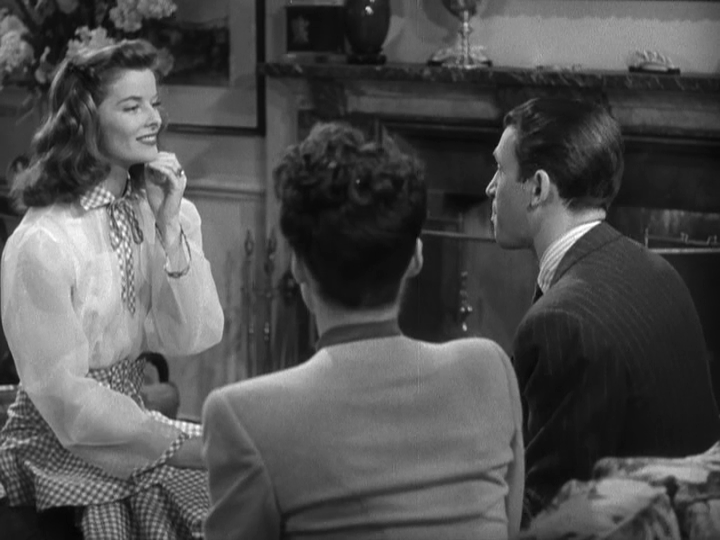
42. The Philadelphia Story (George Cukor, 1940)
43. Stagefright: Aquarius (Michele Soavi, 1987)
44. I'll Take You There (Adrienne Shelly, 1999)
45. Friends with Money (Nicole Holofcener, 2006)
46. Once Upon a Time in China I-III (Hark Tsui, 1991-1993)
47. Merry-Go-Round (Jacques Rivette, 1981)
48. About Elly (Asghar Farhadi, 2009)
49. Winchester '73 (Anthony Mann, 1950)
50. Romance (Catherine Breillat, 1999)