Female Filmmaker Project
(originally posted on letterboxd)
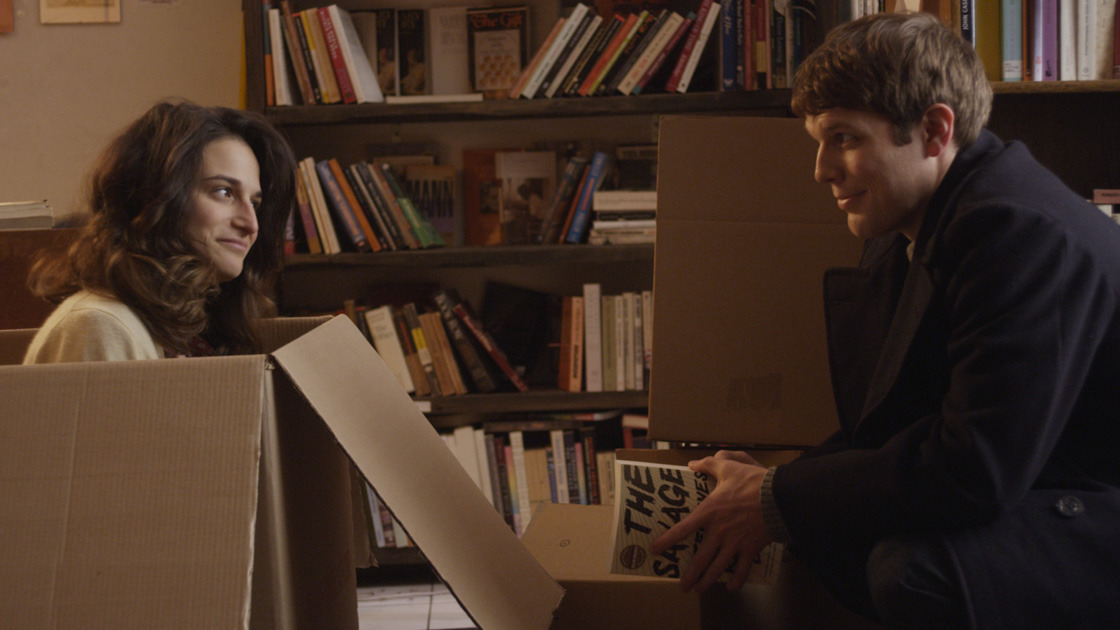
Obvious Child is a true feminist comedy taking up the mantle of a
personal story being very political just for existing within cinemas for
audiences to see. There's one scene in this movie where Nellie (Gabby
Hoffmann) says something along the lines of "We're still being
legislated by old white men in robes who think they have power over our
cunts" and that's really the world we exist in today. Laws where access
to abortion is easy and available are being repealed in states slowly
and there's really no reason why that should be happening so here comes
Obvious Child totally being marketed as an "abortion comedy" in the wake
of all this recent fuckery. The abortion aspect of this movie is just
one piece of this movie's story but the fact that it treats abortion as
just something that people do is remarkable. The strengths of Obvious
Child's politics are in what Donna (Jenny Slate) doesn't do as much as
what she does. The film doesn't dwell on what the father will think in a
major way and she never falls back and then decides to have the child
just because the father seemed like he wanted to be a parent some day.
She never wavers on her initial decision. She's free and independent and
doing what she loves (comedy) and she doesn't want to be a parent. So
an abortion is the best option, and it's her choice completely, because
she's the one in control of her body. That's a strong statement in the
world we live in today, and the biggest reason why I think this film
won't end up getting the audience it so truly deserves. It's
controversial, but like in the film it should be the most normal thing
in the world.
In terms of cinematic family Obvious Child's
closest relative is probably Bridesmaids. There's plenty of scatological
humour to go around and Donna never tip toes around parts of her
behaviour that aren't stereotypically ladylike. She just does whatever
feels right and if that's standing up on stage and telling jokes about
poop and farts that's what she's going to do. There's also a streak of
female friendship plotting that runs through the course of this film.
Gabby Hoffmann plays Donna's best friend Nellie and while Nellie isn't
written as strongly written as Donna she stands as a great supportive
best friend. This isn't Romy and Michelle levels of closeness but their
strong chemistry and the few scenes those two have together give you the
feeling that they really are best friends, and that's always a plus in
this type of film.
Obvious Child isn't a perfectly directed movie
but Robespierre's first major feature does have some quality moments.
She finds a way to make the stand up comedy sequences feel different
than the last with small variations in camera technique. After Donna
bombs with a deeply personal set she works more often in close up and
even begins the scene staring at Donna's back, her bra strap exposed,
top totally ruffled on her chest. It sets up this feeling that this set
is going to be a little more vulnerable and bare than the rest and
Robespierre's lens on Donna's body gives us that feeling. Much like
Frances Ha a lot of the legwork is done by the lead performance. Slate's
body language, often at war with herself between confidence, fragility
and recklessness, shows a person who knows exactly what she is doing
with her life, but easily thrown into a tailspin when things veer off
course. One of my favourite instances of Slate's acting is during the
final stand up set when she finally lets the father to be know she is
getting an abortion and does so with such varied emotional complexity
while still keeping her set in rhythm.
Obvious Child is also just
extremely funny. It helps that the audience I saw this with was almost
75% women and found every joke the most hilarious thing in the world. It
almost felt like a communal experience of female energy laughing at a
comedy that was made for women and had me feeling good for hours
afterward. This is the kind of film that needs to exist more often, for
representation, political and quality reasons.
Tuesday, June 24, 2014
Thursday, June 5, 2014
My experience with "Male Socialization"
CW: Abuse, Transmisogyny, Dysphoria
There’s this thing going around right now about Laverne Cox
not being a “real” woman because of biological destiny and in a few places I frequent
I’ve seen people fighting others over their support of this article. This has
blown over into a discussion about whether or not trans women can ever be “real”
because they grew up socialized male. I just want to talk about this from my
own personal perspective. The attempts of my family to raise me as male
and be a socialized through masculinity were destructive to my younger years in life to the
point where I’ve blocked out almost everything that happened in my pre-teen and
teen years. I seriously cannot tell you
how difficult it was knowing you were female and the entire world from parents,
schooling, and churches telling you otherwise. I felt it from as young as four
years of age and some of my very first memories are of dysphoria. I wanted to
be like any other girl when I grew up and everyone was telling me I’d be a man
some day. That’s an extremely traumatic thing to deal with at four years of
age. I did everything I could to do things other girls around me were doing in
secrecy but I knew if I did any of this in the comfort of my own home my father
would beat me. He did that a lot whenever I did something he didn’t want me to.
I grew up knowing that if I ever did anything feminine I would be at the hands
of abuse from my dad. I put on an act in front of him every day just so I
wouldn’t make him mad or upset him, but I knew that it was just that, an act. I
never picked up on any of the things he was trying to indoctrinate me with
because I knew I was a girl from my first memories. I just didn’t know how to
vocalize it and I didn’t even know what transgender was at the time. It’s not
like transgender people were on television in 1995.
So all of this was weighing on me when I was a child. I’d later go into school and I had a hard time
making friends. I couldn’t relate to guys and I knew my father didn’t want me
only hanging out with girls and becoming their girlfriend. All of my closest
friends were girls, but I never had a best friend forever or anything like
that. I went through my entire elementary school years being bullied for being “girly”
and not tough or liking stereotypical guy things. I faked it a lot of the time
just to avoid being pushed or shoved, but I knew it was going to happen almost
every single day even if I lied. All of this added up over time to the point
where I couldn’t deal with it anymore and I just broke. I was a broken person
by the time I was 12 years old. Then puberty started to happen and my body
started to mutate into something I found horrifying. They were the most
difficult years of my life, and I honestly don’t know how I got through them.
This all culminated with me dropping out of school when I
was 13 years old, and finishing at home. I couldn’t go anymore because I didn’t
have the strength to deal with the people bullying me for not acting like a
guy, and my body was destroying me every single day with puberty. Every time I
tried to go back to school I had panic attacks and intense vomiting. I was
hospitalized for months at one point because doctors didn’t know why I couldn’t
stop panicking every morning of every day and throwing up. I couldn’t bear to tell
them the truth and my story of why I was struggling with everything because it
wasn’t safe. I tried to be the person my family and society wanted me to be, but
it was killing me. I was self destructing from the inside out and I couldn’t do
it. I was crumbling because of society’s pressures to conform to gender roles and
it’s own insistence that who you were assigned at birth was locked into place. I
never accepted maleness or learned from it and the men in my life were
consistently physically abusive to me because I acted feminine.
So I don’t get how I’m “socialized male” and a Trans Woman.
I don’t think those things are necessarily connected. It certainly wasn’t for
me. Whenever I hear people saying Trans Women have been socialized male I get
uncomfortable because it brings all this back up. I wasn’t socialized as male. I
knew that was never me, and I fought back against it the best I could. I wasn’t
given a typical girlhood either even though that’s all I wanted when I was younger.
I just grew up. That’s all that
happened, and I wish everything had been easier and less lonely. I always
latched onto my mom. I just wanted her to think of me as her daughter, and at
times it felt that way. Those are the only real memories I cherish from my
childhood. Everything else is too hard to deal with, and I just wish I had more
memories like that instead of everyone trying to sculpt me into a man. It
ruined the first phase of my life. I knew I was a girl all my life, and I was punished
for being feminine when I was younger every single time I was ever myself.
There was never any part of me that wanted to be a guy. I prayed to an
unanswering god and cried about this on so many nights. I just wanted to be
myself and the only other option was an act. An act that I never believed in
because I was always a girl, even when the men in my life were trying to shape
me in their image. I am the person I always wanted to be now, but she wasn’t
socialized as a man, and if I or anyone else says that we weren’t then that
should be good enough.
Wednesday, May 21, 2014
Bound (Lily and Lana Wachowski, 1996)
Female Filmmaker Project
Despite the majority of the world knowing The Wachowski's for The Matrix and big budget action I think their strongest effort is Bound. This is in large part thanks to their strong visual sense and confident framing. While watching this last night I was highly impressed with what I was seeing, and it's a shame they haven't really made another smaller film like this since they became huge Hollywood figures. After they made The Matrix they have worked exclusively on big budget pictures, but Bound is something different, and I think their best images were created here.
I love how much the film lingers on hands, both as a sexually powerful body part and as an image for their evolving closeness, love and warmth. The film is never really overtly selling their romance as one for the ages, but it's the subtlety of hands joining instead of grand gestures that punctuates the love they felt for each other. I like the little differences between their hands as well. Corky's (Gina Gershon) nails are cut to the quick with no real emphasis for grooming while Violet's are painted, and while still relatively short, heavily manicured.
The Wachowski's also judiciously frame the film in overhead symmetrical shots. My favourite of these is Corky and Violet in bed together after they make love for the first time without being interrupted. The door is only barely open putting just the faintest of light on their bodies, their black clothing clashing with the floor and they are close together. It's a lovely frame. The image of Corky in the closet bound and gagged, trapped essentially, is a distinctly queer image. While she's trapped due to her problems with the plan and not her sexuality it still calls up the idea of being in the closet and not free with one's sexuality.
One of the more surprising aspects of Bound's visuals was how much I felt the architecture was inspired by giallo pictures and more specifically Dario Argento. The architecture of the home's is very sleek, floral and edged much like Suspiria but without the colour palette. Instead Bound goes for the traditional blacks, whites and greys of noir, and even colours like red seem muted and only really shine when blood splatters against white.
Sex positive feminist Susie Bright worked on Bound as a consultant during the sex scenes, and in her analysis of the film she'd say that Bound scenes of sexuality are coded as being "wet", and she praised the film for showcasing aspects of lesbian sexuality on film without oversexualizing the characters. There is one scene in particular that in my mind calls up the idea of the film being "wet" and it happens right before Corky and Violet have sex for the first time so I think she's onto something. The point of view of this scene is with Corky and while she is working to retrieve a piece of jewelry for Violet we get a feeling for her attraction for Violet in numerous ways. The camera focuses on Violet's legs for a moment, then shows Corky's hands around a pipe with water leaking out, she'd twist until the pipe loosened and she'd retrieve the jewelry for Violet. When Corky is framed again Violet is standing right next to her and the scene feels steamy because I think the Wachowski's did a good job of visually representing her thought process in the imagery of this scene.
As much as I love Speed Racer I think Bound is the Wachowski's strongest film in all visual aspects. While their style has developed into something connected with big blockbusters and huge action I think it would suit the Wachowski's well to go back to something smaller. They show a confident understanding of what makes noir and queer cinema work, and I'd love to enjoy another film of theirs as much as this one again. Here's to hoping they do some day!
Despite the majority of the world knowing The Wachowski's for The Matrix and big budget action I think their strongest effort is Bound. This is in large part thanks to their strong visual sense and confident framing. While watching this last night I was highly impressed with what I was seeing, and it's a shame they haven't really made another smaller film like this since they became huge Hollywood figures. After they made The Matrix they have worked exclusively on big budget pictures, but Bound is something different, and I think their best images were created here.
I love how much the film lingers on hands, both as a sexually powerful body part and as an image for their evolving closeness, love and warmth. The film is never really overtly selling their romance as one for the ages, but it's the subtlety of hands joining instead of grand gestures that punctuates the love they felt for each other. I like the little differences between their hands as well. Corky's (Gina Gershon) nails are cut to the quick with no real emphasis for grooming while Violet's are painted, and while still relatively short, heavily manicured.
The Wachowski's also judiciously frame the film in overhead symmetrical shots. My favourite of these is Corky and Violet in bed together after they make love for the first time without being interrupted. The door is only barely open putting just the faintest of light on their bodies, their black clothing clashing with the floor and they are close together. It's a lovely frame. The image of Corky in the closet bound and gagged, trapped essentially, is a distinctly queer image. While she's trapped due to her problems with the plan and not her sexuality it still calls up the idea of being in the closet and not free with one's sexuality.
One of the more surprising aspects of Bound's visuals was how much I felt the architecture was inspired by giallo pictures and more specifically Dario Argento. The architecture of the home's is very sleek, floral and edged much like Suspiria but without the colour palette. Instead Bound goes for the traditional blacks, whites and greys of noir, and even colours like red seem muted and only really shine when blood splatters against white.
Sex positive feminist Susie Bright worked on Bound as a consultant during the sex scenes, and in her analysis of the film she'd say that Bound scenes of sexuality are coded as being "wet", and she praised the film for showcasing aspects of lesbian sexuality on film without oversexualizing the characters. There is one scene in particular that in my mind calls up the idea of the film being "wet" and it happens right before Corky and Violet have sex for the first time so I think she's onto something. The point of view of this scene is with Corky and while she is working to retrieve a piece of jewelry for Violet we get a feeling for her attraction for Violet in numerous ways. The camera focuses on Violet's legs for a moment, then shows Corky's hands around a pipe with water leaking out, she'd twist until the pipe loosened and she'd retrieve the jewelry for Violet. When Corky is framed again Violet is standing right next to her and the scene feels steamy because I think the Wachowski's did a good job of visually representing her thought process in the imagery of this scene.
As much as I love Speed Racer I think Bound is the Wachowski's strongest film in all visual aspects. While their style has developed into something connected with big blockbusters and huge action I think it would suit the Wachowski's well to go back to something smaller. They show a confident understanding of what makes noir and queer cinema work, and I'd love to enjoy another film of theirs as much as this one again. Here's to hoping they do some day!
Saturday, May 17, 2014
Dis Moi (Chantal Akerman, 1980)
Female Filmmaker Project
I've watched films without subtitles before and I went into this not knowing what it was about and I assumed Akerman's form would make sense for not exactly understanding what the characters were saying. It does but, this is a film largely about conversations between Akerman and Holocaust survivors. Akerman herself has family ties to the Holocaust. Her grandparents died in Auschwitz and most of her mother's family perished as well. This is a heavy subject for her to confront. I wish that I could know what these women were saying. I'm sure it was heartbreaking, human, and powerful. I hope one day there are subs available somewhere so I can give this a proper viewing. Although I assume learning french might be an easier route.
Aside from the fact that I didn't know what the characters were saying I still enjoyed watching this for the way Akerman constructs images. There is a connection between this and Jeanne Dielman, News From Home and Meetings of Anna in form. The long static takes built around a person and what they're doing in a room are here, as well as the lingering takes on people in a city setting. She also finds ways to frame these women in new ways from interview to interview. In one take she shoots an interview with the glare from a spotless dining room table visible, and the light from a window is shining on her subject. Moments later she uses mirrors to specifically show a reflection of another woman in a dining room symmetrically framed by two plants on either side of Akerman and her subject. There is even an extended section of one of the women cooking which calls up the rigorous camera work in Jeanne Dielman. Akerman's work has always felt like an extension of documentarianism (News From Home and Hotel Monterey) and I found her eye for creating images to be just as strong when she uses the talking head format that most documentaries use. My favourite moment of the film was when Chantal and one of her interviewees sits down for dinner together and Akerman nods off. The other woman wakes her up and they both give each other a little smile. I may have not known what anyone was saying throughout the entirety of this, but that warm moment of recognition between the two transcends language.
Wednesday, May 14, 2014
Let's Call it Love Part 2: Beginnings
I don’t think there is any argument
that Sleater-Kinney’s debut album is their weakest. It really isn’t even as
good as previous LP’s by their former bands Excuse 17 or Heavens to Betsy. This
album found Sleater-Kinney still honing in on their sound, but for the most
part everything is all here. The riffs that play off each other, the harmonies
of Carrie Brownstein and Corin Tucker, and the lyrics that made personal
experiences into something political are all on Sleater-Kinney. They would just
get better and better as the years went by, but this is a damn good start, and
a touchstone record in the riot grrrl genre.
I mentioned in the last entry that
Sleater-Kinney would not often categorize themselves as riot grrrl until later
in their career. In 1995 it was an important movement that had sadly been
hijacked by corporations and turned into more of a buzzword for fashion than
feminism (something they would talk about on #1 Must Have years later).
Sleater-Kinney’s roots were in riot grrrl and it’s never more apparent than
their first album which could be used as a definition for what the genre is
about both musically and lyrically. It has everything from the shoestring production,
the raging voices of women, lyrics that centered topics like abuse and
oppression of women. It was definitely a riot grrrl record.
The album begins with Don’t Think You Wanna which is a vague
song where Corin speaks about Angels and regret which would not have been out
of place on a Heavens to Betsy album. There are a lot of shorter songs on this
album that feel more like the band figuring out how to make music together and
this is one of them. It doesn’t feature the harmonic qualities of their best
moments which makes it a little forgettable. However, they move right into
their first bona fide classic song after Don’t Think You Wanna. The Day I Went Away is about leaving. Sleater-Kinney have always written songs about departure
of relationships and family with an added twist of frustration due to lack of
love (One More Hour on Dig Me Out). This song has all the introspective sadness
that Sleater-Kinney is so great at. Carrie pleas in the bridge of the song “please
remember me” as she leaves. From a structural standpoint it’s much more
advanced than some of the more punk numbers on here that come and go in less
than 2 minutes. Corin and Carrie doubletrack the vocals at the end of every
line and in doing so the song feels massive. They would get more complicated in
how they would mix their voices on the next album. The Day I Went Away was one
of the first Sleater-Kinney songs I gravitated towards, because I wanted so
desperately to leave a town that was too small for my life. I don’t necessarily
think the song is about a relationship between a parent and child but that’s
how I took to it, and I still come back to it when I feel lost and frustrated
over the fact that my own parents are never going to understand why I can’t be
the person they want me to be or live in a place that would reject me. The best
songs are those that have personal attachment. This is one of those songs.
A Real Man calls back Bikini Kill’s
Sugar from their 1993 album Pussy Whipped in its lyrics. I fucking love riot grrrl songs that take aim at
the idea that women are tools for male pleasure. I loved when Kathleen Hanna
sang Oh baby you're so good, You’re so
fuckin’ big and hard, You’re such a big man, You’ve got such a big cock, Push
it in deeper now, oh deeper, harder, I’m almost cumming, as a total lie.
Corin has her own Kathleen Hanna moment here as well when she sings Don't you wanna feel it inside, They Say
that it feels so nice, All girls should have, a real man and then responds
with I don’t want your kind of love. It’s a powerful statement, and while it
may not be the great song it’s something that punctuates the feeling of all
riot grrrl albums.
If there’s one recurring theme on
Sleater-Kinney’s debut album it’s a feeling of damage in the midst of strength.
The guitars sound muddied and broken, only to come alive in choruses to fight
back with sharp edges to their sound. In a way the vocals take on this same
quality where Corin or Carrie talk-sing only to scream at the right moments. HerAgain is a song that epitomizes all these qualities. There’s a feeling of
sadness that engulfs this song and many others here. I think it’s one reason
why I loved this album from the start. Joy Division’s totemic sadness was never
something I could relate to, but Sleater-Kinney was something that clicked.
Their music fights back on sadness instead of wallowing in it. Corin’s voice is
aggressive here and when I was younger I needed something to voice my frustrations
and her voice was everything.
The middle of the album has the
band running back over themes of sex in How to Play Dead (Carrie's take on "A Real Man"), Sold Out, and Be Yr Mama. What’s especially great about these songs
is the guitar work, and it is at its most playful and complicated on Be Yr Mama.
The band would make this song a live staple and it’s easy to see high with its
high energy and the escalating riffing from Carrie and Corin.
Slow Song is my favourite song on
Sleater-Kinney’s first album. Music is at its most important when it can
reflect a personal feeling in a person. I think that is what makes it feel more
personal than other art forms. Your favourite bands and songs become a part of
you. I don’t know how many times I’ve listened to Slow Song. It was on every
Sleater-Kinney playlist I ever made. There is one line in this song that on
paper seems so simple, but the lyric has always struck me as huge (there’s a
similar moment on Don’t Talk Like on The Hot Rock). That line is “feeling so
down, I’m feeling so down” and it’s just a moment where Corin spoke for me. She
does that often. I don’t even know why this song is important to me. I’ve never
been able to figure out why this song latched onto my soul. It’s just a slow
song.
Laura MacFarlane’s tenure in
Sleater-Kinney is rarely talked about, but she was their drummer on the first
two albums. Most people associate Janet Weiss with Sleater-Kinney when they
think of drummers but Laura came first and she was always solid. Lora’s Song is
the only song where she sang lead vocal, and it’s kind of awesome. She has a
very different voice than Corin or Carrie, but it’s powerful nonetheless. The
chorus is especially strong when her voice seems to break free and soars. It
would have been interesting to have seen the future of Sleater-Kinney as band
with three rotating vocalists but it wasn’t meant to be, and I wouldn’t trade
Janet for the world.
There are three classic songs on
their debut album and the last of these is The Last Song. It is also one of the
very best songs in the history of riot grrrl. It’s a song about breaking free
of a harmful relationship. It’s closure in the screaming, gnashing, powerful
voice of Carrie Brownstein. She gets final say in how this ends and tells on
the person that was hurting her. It’s the greatest personal as political moment
on Sleater-Kinney’s first album. It deserves a place on any riot grrrl best of
playlist as well as Sleater-Kinney.
Monday, May 12, 2014
L'Intrus (Claire Denis, 2004
Female Filmmaker Project
What's remarkable about Claire Denis' L'Intrus is that at a structural level it is maybe her most cinematic feature to date, and I don't mean that in terms of big or sweeping. I think cinema as a medium is visual at it's core. It is about telling a story through images and L'Intrus is built up entirely on images. The narrative is stated in any expositional terms by any character, but shown in every frame. This makes L'Intrus her most basic achievement in cinema and her most difficult statement, because it's entirely interpretational. I'm not sure if what I'm seeing is a vision, a dream or reality but in every image there's meaning both obvious (dogs eating a heart) and cryptic (I'm still not sure what the dogs mean). This makes L'Intrus feel challenging, but in truth everything is laid out there for you to have as you will.
After recently viewing Chantal Akerman's Hotel
Monterey I also thought about this as a film about the idea of home, but instead
of it being only about the nature of a home as a place it is about the body as
a home. Louis Trébor (Michel Subor) is a man who needs a heart transplant, and
with the heart being an essence of life and perhaps even a metaphor for the
soul does that mean without his heart is he now homeless within his own body? I
think Denis' film points towards yes. After his heart transplant he wanders
aimlessly. He isn't quite himself anymore. He moves from country to country and
nothing feels quite right for him. He cannot settle and even his family feels
different.
Denis has always been a filmmaker of bodies and the tone of
her films often appear in the way she shoots those figures. She's always close,
framing them closely into the lens, and often focusing on one body part. She'll
move the camera over one's body and depending on how she does all of this she
creates different tones of physique. In Vendredi Soir the human body is
sensual, alive with passion and free. In Bastards she took sexuality and
used it for horror. In L'Intrus Louis body feels cold and in a way dead.
He has a scar running up and down his chest and every time we see his frame
it's draped in this cool grey or blue lighting or he's hooked up to a machine.
There is no warmth in his soul after he loses his original heart. He's
essentially homeless in his own body. This is in stark contrast to the way
Louis’ grandson is shot earlier in the film when his face is covered in
sunlight and has a smile on his face. He has his original heart after all.
This makes me think Denis' film is also about aging and
regret. Louis' has never been a good father. His entire family is estranged and
he doesn't even know his grandchildren. Despite his heart transplant he is
sickly and even if he continues he doesn't have the warmth of life in him. He
doesn't have a family so in one of the more absurd scenes a group of people
he's living with hold auditions to be his new son. While on his death bed he
has one final vision of his son with the same scar running down his chest, he
sees a coffin later and Louis is then on a boat. I think this signifies his son
being the one thing he lost in life that he wishes he could have back.
What makes L'Intrus so fascinating is how flexible it is, and how someone else could easily come up with
something different. In the power of cinema as an artistic medium I think a
viewer can see what they want to and go on their own path. L'Intrus is
one of those films. It feels expansive and in it's imagery so very human. We
all have dreams that we're unsure of the meaning and one of the coolest things
about cinema is that it can sometimes act as a function of those dreams. Where
everything is endless and definition is mutable.
Monday, May 5, 2014
March/April 2014: Cinema
I held off on a monthly report for March because of a lack of viewings, but I'm back to doing the monthly thing now combining the past two months. I made a few cinematic memories over the past two months, and my favourites were from Ernst Lubitsch and Jean-Luc Godard. I also finished the filmography of Elaine May who has to be one of the most under appreciated directors of all time. She only made four films and each one of them is very good and Mikey and Nicky and A New Leaf are masterpieces. I finally got a start on new films as well in the past 61 days with Stranger By the Lake and Only Lovers Left Alive. The highlight of the past two months was writing for The Vulgar Cinema again. I loved Johnnie To's, Don't Go Breaking My Heart and it is one of the very best films I've seen this year. My interests outside of cinema have mostly been consumed by wrestling, but I did start up on classic era Simpsons and it's as good as everyone says. 2014 is shaping up to be a fruitful year in cinema even if I'm working at a much slower rate than I have in past years for personal reasons. May is already off to a great start, and I might have big positive life changes this month as well. Things are looking mighty swell for Willow. I hope they are for you too.
Best
Don't Go Breaking My Heart (Johnnie To, 2011)
The Doll (Ernst Lubitsch, 1919)
Notre Musique (Jean-Luc Godard, 2004)
Working Girls (Lizzie Borden, 1986)
The Fruit of the Paradise (Vera Chytilova, 1970)
Mikey and Nicky (Elaine May, 1976)
Stranger by the Lake (Alain Guiraudie, 2014)
First Name: Carmen (Jean-Luc Godard, 1983)
Christine (John Carpenter, 1983)
The Palm Beach Story (Preston Sturges, 1942)
Journey to Italy (Roberto Rossellini, 1954)
Tokyo Drifter (Sejin Suzuki, 1966)
La Chambre (Chantal Akerman, 1972)
The Great Dictator (Charlie Chaplin, 1940)
Meet Me in St. Louis (Vincente Minnelli, 1944)
Best Rewatches
Whip It (Drew Barrymoore, 2009)
My Neighbor Totoro (Hayao Miyazaki, 1988)
Moonrise Kingdom (Wes Anderson, 2012)
8 1/2 (Federico Fellini, 1963)
Dogville (Lars von Trier, 2004)
Worst
Labor Day (Jason Reitman, 2014)
Proxy (Zack Parker, 2013)
Devil's Knot (Atom Egoyan, 2013)
Goats (Christopher Neil, 2012)
Best
Don't Go Breaking My Heart (Johnnie To, 2011)
The Doll (Ernst Lubitsch, 1919)
Notre Musique (Jean-Luc Godard, 2004)
Working Girls (Lizzie Borden, 1986)
The Fruit of the Paradise (Vera Chytilova, 1970)
Mikey and Nicky (Elaine May, 1976)
Stranger by the Lake (Alain Guiraudie, 2014)
First Name: Carmen (Jean-Luc Godard, 1983)
Christine (John Carpenter, 1983)
The Palm Beach Story (Preston Sturges, 1942)
Journey to Italy (Roberto Rossellini, 1954)
Tokyo Drifter (Sejin Suzuki, 1966)
La Chambre (Chantal Akerman, 1972)
The Great Dictator (Charlie Chaplin, 1940)
Meet Me in St. Louis (Vincente Minnelli, 1944)
Best Rewatches
Whip It (Drew Barrymoore, 2009)
My Neighbor Totoro (Hayao Miyazaki, 1988)
Moonrise Kingdom (Wes Anderson, 2012)
8 1/2 (Federico Fellini, 1963)
Dogville (Lars von Trier, 2004)
Worst
Labor Day (Jason Reitman, 2014)
Proxy (Zack Parker, 2013)
Devil's Knot (Atom Egoyan, 2013)
Goats (Christopher Neil, 2012)
Subscribe to:
Posts (Atom)


